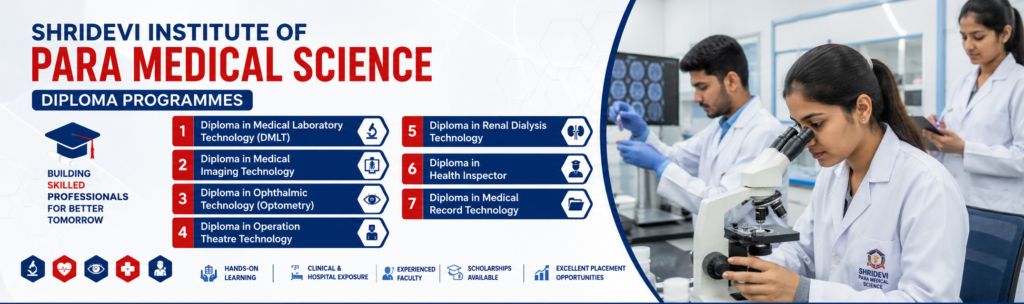
The Diploma in Medical Laboratory Technology (DMLT) is a comprehensive 2-year program that trains students to become skilled laboratory technicians capable of performing various diagnostic tests. The curriculum covers clinical biochemistry, microbiology, hematology, histopathology, and clinical pathology, providing students with both theoretical knowledge and hands-on practical experience.
Students learn to operate sophisticated laboratory equipment, maintain quality control standards, and accurately analyze biological samples. The program emphasizes patient safety, ethical practices, and the importance of precise diagnostic reporting in healthcare delivery.
Graduates are equipped to work in hospitals, diagnostic centers, research laboratories, and blood banks, playing a crucial role in disease diagnosis and treatment monitoring.
The Diploma in Medical Imaging Technology is a specialized 2-year program that prepares students to operate advanced imaging equipment including X-ray, CT scan, MRI, and ultrasound machines. The curriculum combines anatomy, physiology, radiography physics, and imaging techniques with extensive clinical training.
Students gain expertise in patient positioning, radiation safety protocols, image acquisition, and preliminary image analysis. The program emphasizes the critical role of imaging technology in modern diagnostic medicine and patient care.
Upon completion, graduates can pursue careers as radiologic technologists in hospitals, imaging centers, and diagnostic facilities, contributing to accurate disease detection and treatment planning.
The Diploma in Ophthalmic Technology (Optometry) is a comprehensive program that trains students to assist ophthalmologists in diagnosing and treating eye disorders. The 2-year curriculum covers ocular anatomy, physiology, refraction techniques, ophthalmic instruments, and common eye diseases.
Students learn to perform vision tests, operate diagnostic equipment like slit lamps and tonometers, assist in eye surgeries, and provide pre and post-operative care. The program includes extensive hands-on training in clinical settings.
Graduates are prepared to work in eye hospitals, optical centers, and ophthalmic clinics, playing a vital role in vision care and eye health management.
The Diploma in Operation Theatre Technology is a specialized 2-year program designed to train students in surgical assistance and operation room management. The curriculum covers surgical instruments, sterilization techniques, anesthesia basics, surgical procedures, and infection control protocols.
Students receive comprehensive training in preparing the operation theatre, assisting surgeons during procedures, managing surgical instruments, and ensuring patient safety throughout surgical interventions. The program emphasizes teamwork, quick decision-making, and maintaining sterile environments.
Graduates are equipped to work as operation theatre technicians in hospitals, surgical centers, and specialty clinics, ensuring smooth and safe surgical operations.
The Diploma in Renal Dialysis Technology is a specialized 2-year program that trains students to operate dialysis machines and provide care to patients with kidney failure. The curriculum covers renal physiology, dialysis principles, water treatment, machine operation, and patient monitoring.
Students learn to prepare dialysis solutions, operate hemodialysis and peritoneal dialysis equipment, manage vascular access, monitor vital signs during treatment, and handle emergency situations. The program includes extensive clinical rotations in dialysis centers.
Graduates can work as dialysis technicians in hospitals, dialysis centers, and nephrology clinics, providing life-saving treatment to patients with end-stage renal disease.
The Diploma in Health Inspector is a comprehensive program that prepares students to monitor and ensure public health and sanitation standards. The curriculum covers environmental health, communicable disease control, food safety, water quality testing, waste management, and public health legislation.
Students learn to conduct health inspections, collect and analyze samples, identify health hazards, implement disease prevention strategies, and educate communities about hygiene and sanitation practices. The program includes field training and practical inspections.
Graduates are qualified to work as health inspectors in municipal corporations, public health departments, food safety organizations, and environmental agencies, safeguarding community health.
The Diploma in Medical Record Technology is a specialized program that trains students in managing patient health information and medical records. The curriculum covers medical terminology, health information management, medical coding, record maintenance, data privacy, and electronic health records (EHR) systems.
Students learn to organize, maintain, and retrieve medical records efficiently, ensure accuracy and confidentiality of patient data, apply coding systems like ICD and CPT, and manage health information databases. The program emphasizes legal and ethical aspects of health information management.
Graduates can work as medical records technicians in hospitals, clinics, insurance companies, and healthcare organizations, ensuring proper documentation and management of patient health information.
For II PUC / 12th passed candidates – 2 Years
For SSLC / 10th passed Candidates – 3 years
© 2025 Created with SCT All Rights Reserved.