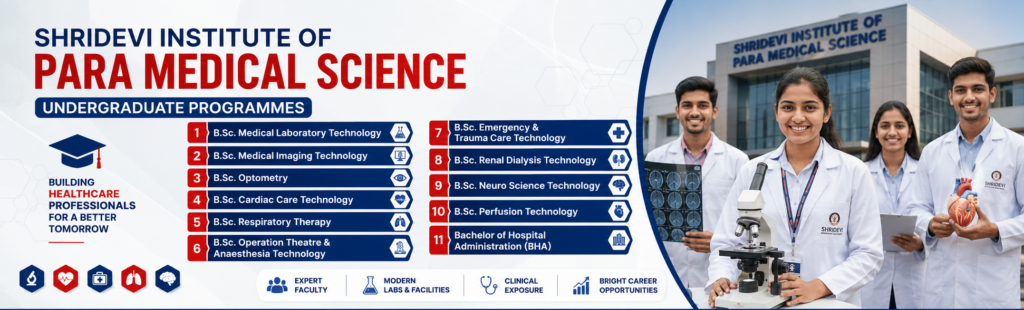
The B.Sc. in Medical Laboratory Technology is a 3-year undergraduate program that trains students to perform complex diagnostic tests on blood, body fluids, and tissues. The curriculum covers clinical biochemistry, microbiology, hematology, and pathology, blending theoretical knowledge with extensive practical lab work.
Students learn to operate advanced laboratory equipment, maintain strict quality control, and ensure accurate reporting of test results. The program emphasizes the critical role of lab technicians in disease diagnosis and treatment monitoring.
Graduates are well-prepared for careers in hospital laboratories, diagnostic centers, research institutions, and blood banks, forming the backbone of modern medical diagnostics.
This 3-year program focuses on the operation of advanced medical imaging equipment such as X-ray, CT scan, MRI, and ultrasound machines. Students gain a deep understanding of human anatomy, radiography physics, and imaging techniques essential for modern diagnostics.
The curriculum includes rigorous training in patient positioning, radiation safety protocols, and image acquisition. Students learn to produce high-quality diagnostic images that assist physicians in accurate disease detection and treatment planning.
Upon completion, graduates can work as radiologic technologists in hospitals, imaging centers, and specialized diagnostic facilities, playing a vital role in patient care.
The B.Sc. in Optometry is a 3-year degree program dedicated to eye care and vision science. The curriculum covers ocular anatomy, refraction techniques, contact lens fitting, and the diagnosis of common eye diseases, preparing students to become primary eye care providers.
Students receive hands-on training with advanced diagnostic instruments like slit lamps, tonometers, and autorefractors. The program also includes clinical rotations where students perform comprehensive eye exams and prescribe corrective lenses.
Graduates are equipped to work in eye hospitals, optical retail chains, and private clinics, contributing to the prevention and management of vision-related issues.
This specialized 3-year program trains students in the diagnosis and management of cardiovascular diseases. The coursework covers cardiac anatomy, physiology, ECG interpretation, echocardiography, and stress testing, providing a strong foundation in heart health.
Students learn to operate sophisticated cardiac monitoring equipment, assist cardiologists during procedures, and manage patients in cardiac care units. The program emphasizes quick decision-making and precision in critical care environments.
Graduates are highly sought after in heart hospitals, cardiology departments, and diagnostic centers, where they play a crucial role in saving lives through timely cardiac interventions.
The B.Sc. in Respiratory Therapy is a 3-year program focused on the treatment of patients with breathing disorders. The curriculum covers pulmonary physiology, mechanical ventilation, oxygen therapy, and the management of conditions like asthma, COPD, and sleep apnea.
Students gain practical experience in operating ventilators, nebulizers, and other respiratory care equipment. They learn to assess lung function, administer aerosol medications, and provide life support in emergency and intensive care settings.
Graduates are prepared to work as respiratory therapists in hospitals, ICUs, and pulmonary rehabilitation centers, ensuring patients receive optimal respiratory care.
This 3-year program is designed to train students in the management of operation theatres and the administration of anesthesia. The curriculum covers surgical instruments, sterilization techniques, anesthesia equipment, and patient monitoring during surgery.
Students learn to prepare the operation theatre, assist surgeons and anesthesiologists, and ensure a sterile and safe environment for surgical procedures. The program includes extensive clinical training in various surgical specialties.
Graduates are equipped to work as operation theatre technologists and anesthesia technicians in hospitals and surgical centers, ensuring the smooth and safe execution of surgical operations.
The B.Sc. in Emergency & Trauma Care Technology is a 3-year program that prepares students to handle medical emergencies and trauma cases. The curriculum covers emergency medical services (EMS), trauma management, critical care, and disaster response.
Students learn advanced life support techniques, patient triage, and the operation of emergency medical equipment. The program includes rigorous training in ambulance services and emergency departments, focusing on rapid assessment and stabilization of patients.
Graduates are prepared for high-pressure roles in hospital emergency rooms, ambulance services, and disaster management teams, where quick thinking and skilled intervention save lives.
This 3-year program focuses on the care of patients with kidney failure. The curriculum covers renal physiology, hemodialysis, peritoneal dialysis, and the operation and maintenance of dialysis machines. Students learn to manage vascular access and monitor patients during treatment.
The program includes hands-on clinical training in dialysis centers, where students learn to handle emergencies, maintain water treatment systems, and ensure patient comfort and safety during lengthy dialysis sessions.
Graduates are qualified to work as dialysis technologists in hospitals and specialized renal care centers, providing life-sustaining treatment to patients with chronic kidney disease.
The B.Sc. in Neuro Science Technology is a specialized 3-year program dedicated to the diagnosis and management of neurological disorders. The curriculum covers neuroanatomy, neurophysiology, EEG, EMG, and other neuro-diagnostic techniques.
Students learn to operate sophisticated equipment used to record brain and nerve activity, assist neurologists during procedures, and analyze diagnostic data. The program emphasizes the importance of precision in neurological assessments.
Graduates are prepared to work in neurology departments, neuro-diagnostic labs, and research centers, contributing to the understanding and treatment of complex brain and nervous system disorders.
This highly specialized 3-year program trains students to operate the heart-lung machine during cardiac surgeries. The curriculum covers cardiovascular physiology, extracorporeal circulation, and the management of patients on cardiopulmonary bypass.
Students learn to set up and monitor perfusion equipment, manage blood gases, and ensure the safety of patients during open-heart surgeries. The program includes extensive clinical rotations in cardiac operating theatres.
Graduates are equipped to work as perfusionists in heart hospitals and cardiac surgery centers, playing a critical role in the success of complex cardiovascular procedures.
The Bachelor of Hospital Administration is a 3-year program designed to train students in the management and administration of healthcare facilities. The curriculum covers hospital operations, healthcare finance, human resources, medical ethics, and health information management.
Students learn to manage hospital departments, ensure quality patient care, and navigate the complex regulatory environment of healthcare. The program includes internships in hospital administration, providing practical exposure to real-world challenges.
Graduates are prepared for leadership roles in hospital management, healthcare consulting, and public health administration, ensuring the smooth and efficient operation of healthcare institutions.
3 ½ years including 6 months of Internship period
Passed II PUC / 12th (10+2) with Physics, Chemistry, Biology, and English as core subjects.
Kerala State candidates who have passed Vocational Higher Secondary Education (VHSE) with Physics, Chemistry, Biology, and English are also eligible.
Lateral Entry: Candidates with a DMLT or equivalent diploma from a Government-recognized board are eligible for direct admission to the 2nd year of B.Sc. Medical Laboratory Technology (BMLT).
© 2025 Created with SCT All Rights Reserved.